
Deven's Recommended ReadingSide IncomeFull-TimeScale
$100M Offers
by Alex Hormozi
Business comes down to one skill: making an offer so good the person would feel stupid saying no.
Read the summary and notesThe full book, section by section, with Deven's notes on which stages it's for and how he'd use it.
44 summaries · 3 on Deven's Recommended Reading
The books Deven rates and annotates himself. His notes run through each summary in the green boxes and gather at the end of the page.
by Alex Hormozi
Business comes down to one skill: making an offer so good the person would feel stupid saying no.
Read the summary and notes
by Russell Brunson
Expertise does not sell itself; a movement does, and every movement has the same three parts: a leader people are drawn to, a cause bigger than the product, and a genuinely new opportunity rather than an improvement on the old one.
Read the summary and notes
by Alex Hormozi
A money model is a deliberate sequence of offers, and the reason most businesses starve is that they only ever make one.
Read the summary and notes44 summaries
The startup path itself.

by Alex Hormozi
Business comes down to one skill: making an offer so good the person would feel stupid saying no.
Read the summary and notesby Alex Hormozi
A money model is a deliberate sequence of offers, and the reason most businesses starve is that they only ever make one.
Read the summary and notes
by Dan Sullivan and Benjamin Hardy
Going 10x means letting go of the 80% that got you here and going all in on the 20% that will take you there, which makes the impossible-sounding goal easier to reach than the modest one.
Read the summary and notes
by Ryan Daniel Moran
If you have four products selling 25 sales a day at an average price point of $30, you have a million-dollar business, and you build it by choosing your customer before your product.
Read the summary and notes
by Donald Miller
Anyone can raise their value on the open market by building the character of a value-driven professional and mastering ten learnable business competencies, from leadership and messaging to management and execution.
Read the summary and notes
by Dan Martell
Don't hire to grow your business, hire to buy back your time.
Read the summary and notesGetting customers and keeping them.
by Russell Brunson
Expertise does not sell itself; a movement does, and every movement has the same three parts: a leader people are drawn to, a cause bigger than the product, and a genuinely new opportunity rather than an improvement on the old one.
Read the summary and notes
by Alex Hormozi
Leads alone aren't enough: you need engaged leads, people who show interest in the stuff you sell.
Read the summary and notes
by Roger Dooley
Most thought, emotion and decision-making happens below conscious awareness, so marketing works best when it appeals to the other 95% of the customer's brain.
Read the summary and notes
by Donald Miller
Customers care about their own story, so a business grows when it clarifies its message by making the customer the hero and positioning itself as the guide.
Read the summary and notes
by Nir Eyal
Habit-forming products connect the user's problem to a company's solution frequently enough to form a habit, through repeated cycles of trigger, action, variable reward and investment.
Read the summary and notes
by Jeff Walker
The Product Launch Formula turns a product release into an event your prospects eagerly anticipate, using sequences, stories and mental triggers in place of hope marketing.
Read the summary and notes
by Donald Miller and Dr. J.J. Peterson
Marketing is a five-piece sales funnel anyone can build, and it works only to the degree that it is actually executed.
Read the summary and notes
by Oren Klaff
Pitches are built in the neocortex and received by the crocodile brain, so the way to win is to control the frame, seize status and create intrigue before any logic is heard.
Read the summary and notes
by Claude C. Hopkins
Advertising is salesmanship in print, and once every ad is keyed, traced and judged by its cost per customer, it stops being a gamble and becomes a science.
Read the summary and notesOnce it is bigger than you.
by Jim Collins and Bill Lazier
Enduring great companies are built by stacking disciplined people decisions, a clear vision, honest strategy, abundant innovation and tactical excellence, compounded over decades.
Read the summary and notes
by Kerry Patterson, Joseph Grenny, Ron McMillan and Al Switzler
At the heart of almost all chronic problems in organizations, teams and relationships lie crucial conversations that people are either not holding or not holding well.
Read the summary and notes
by Leil Lowndes
What sets successful people apart is their more skillful way of dealing with other people, and that skill breaks down into small, learnable tricks.
Read the summary and notes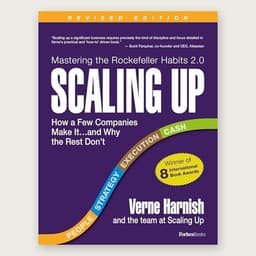
by Verne Harnish
Scaling a business comes down to four decisions, people, strategy, execution and cash, and a handful of one-page tools and routines lets leaders get all four right as the company grows.
Read the summary and notes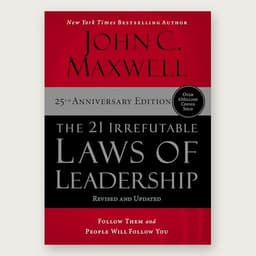
by John C. Maxwell
The true measure of leadership is influence, and it rests on 21 laws that can each be learned, though no leader does all 21 well.
Read the summary and notesThe operating system before the tactics.
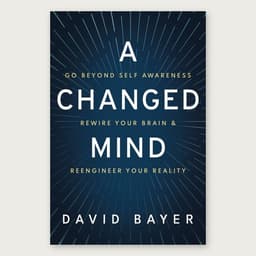
by David Bayer
Beliefs are decisions, mostly made unconsciously in childhood, so you can remake them, and all suffering is caused by one thing only: unintelligent thinking.
Read the summary and notes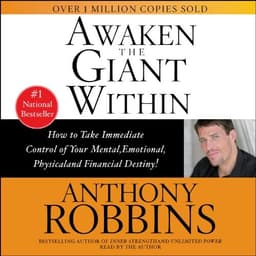
by Tony Robbins
Your life is shaped by three decisions you make constantly, what to focus on, what things mean and what to do, and underneath them by what your nervous system links to pain and pleasure.
Read the summary and notes
by Amy Cuddy
Presence, the state of trusting and expressing your real thoughts, feelings, values and abilities in the moment, can be reached through the mind and the body, and it lets people bring their boldest selves to their biggest challenges.
Read the summary and notes
by Maxwell Maltz
You will act like the sort of person you conceive yourself to be, and because the nervous system cannot tell a vividly imagined experience from a real one, you can change that self-image and let your built-in success mechanism do the rest.
Read the summary and notes
by Tim S. Grover
Elite performers are cleaners: they trust their instincts, control their dark side, never stop working and are never satisfied, and anyone willing to pay that price can think the same way.
Read the summary and notes
by Todd Herman
A deliberately built alter ego, created for one field of play, lets you bring out capabilities you already have that your everyday self holds back.
Read the summary and notesThe Wattles lineage.
by Joe Dispenza
Your personality, how you think, act and feel, creates your personal reality, so to create a new life you have to break the habit of being yourself and become a new personality.
Read the summary and notes
by Neville Goddard
Feeling is the one and only medium through which ideas are conveyed to the subconscious, so to change your world you assume the feeling of the wish already fulfilled.
Read the summary and notes
by Neville Goddard
Your own wonderful human imagination is the actual creative power of God within you, and assuming the feeling of the wish fulfilled is a creative act that will appear in your world.
Read the summary and notes
by Alan Watts
The separate ego is a social convention mistaken for a fact, and what each of us really is, is the universe playing hide-and-seek with itself.
Read the summary and notes
by Napoleon Hill
Drifting, the habit of letting fear and other people do your thinking, is how the Devil controls 98% of humanity, and definiteness of purpose is the first of seven principles that break his hold.
Read the summary and notesPhilosophy of a successful life.
by Robert Greene
Mastery is a learnable form of power reached through a process of apprenticeship, creative activity and intuitive command,, and anyone willing to put in years of disciplined practice can reach it.
Read the summary and notes
by Stephen R. Covey
Lasting effectiveness comes from the inside out, from aligning character with timeless principles, and private victories precede public victories.
Read the summary and notesThe relationship with money, not the spreadsheet.
by Mike Michalowicz
Take profit first from every deposit, using sales minus profit equals expenses, and a business is forced to run on what remains and becomes permanently profitable.
Read the summary and notesHow people actually decide.
by Dale Carnegie
The only way on earth to influence other people is to talk about what they want and show them how to get it.
Read the summary and notes
by Robert B. Cialdini
Thousands of compliance tactics fall into six categories, each governed by a psychological principle that can produce automatic, mindless compliance: reciprocation, commitment and consistency, social proof, liking, authority and scarcity.
Read the summary and notes
by Richard C. Schwartz
The mind is naturally made of parts that are all valuable, and healing comes from leading them with an undamaged Self instead of fighting them.
Read the summary and notes
by Malcolm Gladwell
Success is explained less by talent and effort alone than by the hidden opportunities and cultural legacies that let some people learn and work hard in ways others cannot.
Read the summary and notes
by Robert Cialdini
The best persuaders become the best through pre-suasion: arranging, in the moment before a message, for the audience to be receptive to it.
Read the summary and notes
by Charles Duhigg
Every conversation is one of three kinds, practical, emotional or social, and connection comes from recognizing which one is happening and matching it, a set of skills anyone can learn.
Read the summary and notesTime, attention, deep work.
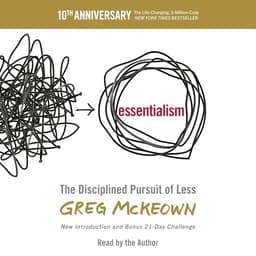
by Greg McKeown
Essentialism is a disciplined, systematic approach for determining where your highest point of contribution lies, then making execution of those things almost effortless.
Read the summary and notes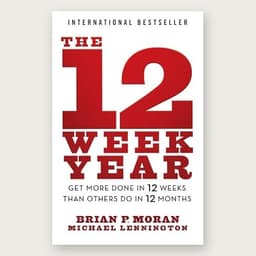
by Brian P. Moran and Michael Lennington
The gap between goals and results is an execution problem, and redefining a year as 12 weeks creates the year-end urgency and focus every week of the year.
Read the summary and notesFounder and athlete stories.

by Tony Hsieh
If you get the culture right, most of the other stuff, like great customer service and a great long-term brand, will happen naturally on its own.
Read the summary and notes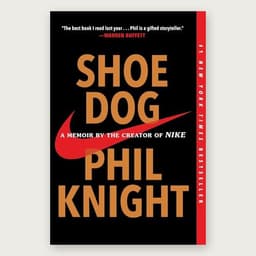
by Phil Knight
Nike was built by a band of misfits who kept saying yes to growth when every banker said the balance sheet could not carry it, and the lesson Knight draws is to seek a calling and not to stop.
Read the summary and notesEach one lands the morning it publishes, with the one move Deven would make from it.
Every summary says who the book is for by income stage. The stages are about your income, not your industry.